


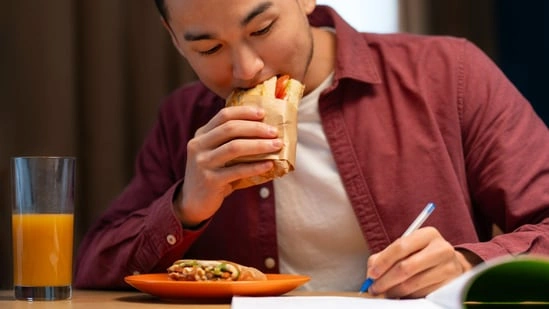
Do you often find yourself reaching for snacks during exam season or just before a big presentation even when you are not physically hungry Stress has a powerful impact on behaviour and for many people it triggers emotional or stress eating. While occasional indulgence is normal repeatedly using food as a coping strategy can gradually harm both physical health and emotional balance.
According to psychiatrist Dr Vineet Pali from Maarga Mind Care Gurgaon stress eating is a maladaptive coping response that can lead to weight gain poor stress regulation and an unhealthy relationship with food. Instead of ignoring or suppressing cravings he suggests understanding the emotional triggers behind them and building healthier coping mechanisms.
Here are three expert backed strategies to help manage stress eating
1 Recognise the difference between emotional and physical hunger
One of the first steps is learning to identify whether you are truly hungry or simply reacting to emotions. Emotional hunger tends to appear suddenly and feels urgent often accompanied by cravings for specific comfort foods. Physical hunger on the other hand develops gradually and can be satisfied with a balanced meal.
Stress boredom loneliness and anxiety are common triggers for emotional eating. Creating a short pause before eating can help you assess your needs. A brief breathing exercise a five minute moment of stillness or a short walk can build distance between emotion and action and prevent impulsive decisions.
2 Develop healthier coping tools
The goal is not strict restriction but expanding your emotional toolkit so food is not the automatic response to stress. Replacing emotional eating with constructive outlets can regulate mood more effectively.
Helpful alternatives include light physical activity journaling stretching listening to calming music or speaking with a trusted friend. These activities naturally reduce stress hormones and support emotional stability without creating the cycle of guilt and overeating that often follows stress induced snacking.
3 Prioritise balanced and regular meals
Skipping meals or following extreme restrictive diets can increase vulnerability to emotional eating. When the body is undernourished stress responses become stronger making cravings harder to resist.
Eating balanced meals rich in protein fibre and healthy fats at regular intervals promotes satiety and stabilises mood. Planning meals and healthy snacks in advance can also reduce impulsive choices during high pressure situations.
If stress eating feels difficult to control seeking guidance from a qualified mental health professional can provide structured support and long term strategies for building a healthier relationship with food and stress.
This information is intended for educational purposes only and should not replace personalised medical advice from a healthcare professional.