


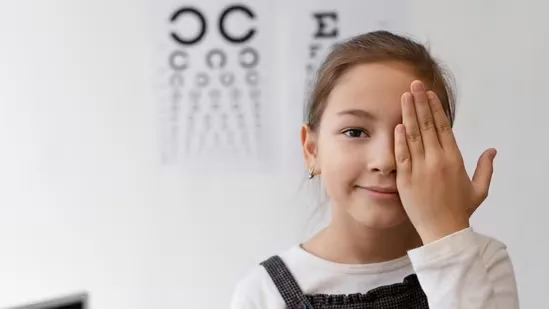
Many children are unable to explain when they are struggling with poor eyesight, which often leads to delays in early detection. According to Dr. Jay Goyal, an experienced eye surgeon, LASIK and retina specialist, and Director at Surya Eye Hospital Mumbai, parents and teachers must be vigilant about recognizing the symptoms of poor vision in children and ensure timely treatment.
Dr. Goyal emphasizes that nearly 34 lakh children in India attend school every day with uncorrected vision issues such as myopia, hyperopia, or astigmatism. These conditions can impact learning ability and daily life if left untreated. He stresses that the real challenge lies in the fact that warning signs are often ignored or misunderstood, leading to long-term academic and social difficulties.
Key Signs of Vision Problems in Children
- Difficulty concentrating – Children may lose interest in activities like reading, painting, or games that require visual focus.
- Holding screens too close – Sitting very near to televisions or holding handheld devices close to the face may indicate nearsightedness.
- Frequent eye rubbing – Persistent rubbing of the eyes can be linked to fatigue, strain, or allergic conjunctivitis.
- Headaches or eye pain – Children who overexert their eyes to compensate for blurred vision may develop pain or frequent headaches.
- Squinting – This may suggest a refractive error where clarity improves temporarily by narrowing the eyes.
- Tilting head or covering one eye – A sign of amblyopia (lazy eye) or misalignment, where the child attempts to see more clearly by adjusting their viewing angle.
Importance of Early Eye Check-ups
Dr. Goyal advises routine eye exams at schools and regular visits to ophthalmologists. If a child fails a vision screening, comprehensive tests should be done to assess clarity, sharpness, depth perception, and alignment. Early treatment is essential to correct conditions such as myopia, strabismus, or amblyopia before they worsen.
He concludes, “Clear vision is fundamental for a child’s academic success, participation in activities, and overall confidence. Timely detection and treatment of vision issues can significantly improve their future development. Protecting children’s eyes today is an investment in their tomorrow.”