


In Hamnet, director Chloé Zhao reimagines the private sorrow behind one of literature’s most enduring tragedies, shifting the spotlight away from William Shakespeare and toward the woman history barely recorded — his wife Agnes Hathaway. Adapted from Hamnet by Maggie O’Farrell, the film explores the devastating death of Shakespeare’s only son and the emotional aftershocks that may have shaped the writing of Hamlet.
Although Paul Mescal portrays Shakespeare as a grieving father wrestling with loss and creative paralysis, the emotional core of the film belongs entirely to Jessie Buckley. Her Agnes is observant resilient and profoundly human — a woman negotiating motherhood love superstition and unbearable grief within the confines of 16th-century England. Buckley captures the quiet rhythms of domestic life as well as the explosive rupture of tragedy with extraordinary depth.
The film traces Agnes from her early days wandering through forests — whispered about as a healer or witch — to her passionate connection with William and the birth of their children. When she later gives birth to twins Hamnet and Judith the sense of foreboding subtly lingers. Zhao stages the inevitable tragedy with restraint and then with raw intensity allowing Buckley’s portrayal of maternal devastation to anchor the film’s most harrowing moments.
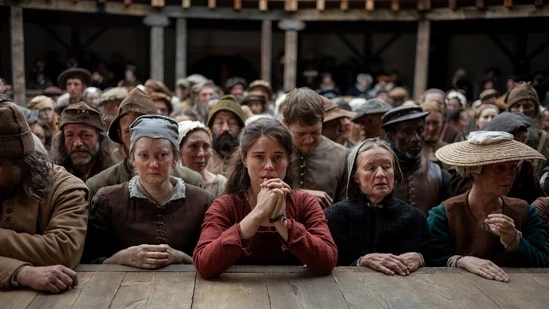
Visually the film is lyrical and immersive. Cinematographer Łukasz Żal crafts sweeping natural landscapes that contrast with the intimacy of candlelit interiors. In the latter half Zhao boldly reconstructs the staging of Hamlet within a meticulously recreated Globe Theatre bringing art and grief into the same physical space. The performance within the performance becomes a powerful act of release as Agnes confronts the transformation of personal loss into public storytelling.
Buckley’s performance is magnetic in its stillness. She embodies a grief that feels lived-in rather than performed conveying anguish through silence posture and fleeting expressions. Mescal offers a thoughtful interpretation of Shakespeare as a man shaped by sorrow while young actor Jacobi Jupe brings tenderness and wisdom to the role of Hamnet. Max Richter’s evocative score deepens the emotional resonance without overwhelming the narrative.
Rather than presenting a speculative retelling the film offers a poetic meditation on how art can emerge from heartbreak. Hamnet suggests that tragedy on stage may have been born from tragedy at home and that creative expression can transform private pain into collective catharsis. It is a deeply affecting cinematic experience that lingers long after the final frame.