


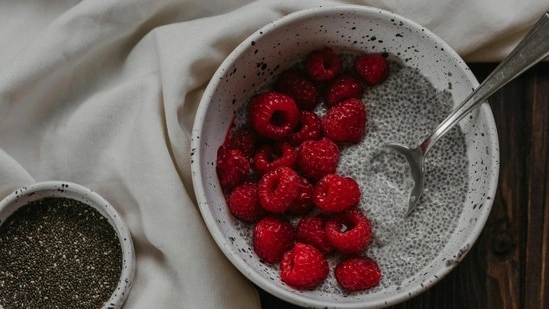
Chia seeds are widely praised for their nutritional benefits and are often added to diets to boost daily fibre intake. However health experts warn that consuming them in large amounts too quickly may cause digestive discomfort. According to Karan Rajan, the safest way to include chia seeds in your routine is to start with small quantities and increase gradually over time.
These tiny seeds are packed with nutrients including fibre protein healthy fats and antioxidants. Because of their high fibre content they can support digestion and gut health. But a sudden increase in fibre intake can overwhelm gut bacteria especially for individuals who normally consume low amounts of fibre in their diet.
Dr Rajan explained that many people typically consume only around 10 to 15 grams of fibre per day. If someone suddenly adds two tablespoons of chia seeds to their meals the digestive system may struggle to adapt. This rapid change can lead to bloating gas and stomach discomfort as gut microbes work harder to break down the increased fibre.
To reduce these effects experts recommend starting with about one teaspoon of chia seeds daily and gradually increasing the amount over one to two weeks. This slow approach allows gut bacteria to adjust to the higher fibre levels more comfortably.
Another factor to consider is digestive sensitivity. People who live with Irritable Bowel Syndrome may find that chia seeds trigger symptoms even though they are generally considered a low FODMAP food. The gel like texture that forms when chia seeds absorb liquid may increase intestinal pressure in some individuals leading to bloating or discomfort.
Hydration is also extremely important when eating chia seeds. The seeds can absorb around ten to twelve times their weight in water. Without enough fluid intake they may draw water from the digestive tract which could worsen constipation instead of relieving it.
Health professionals suggest drinking at least eight to ten ounces of water for every tablespoon of chia seeds consumed. Grinding the seeds before eating them may also help improve digestion by making it easier for gut bacteria to process the nutrients.
While chia seeds can be a healthy addition to a balanced diet they should always be introduced gradually and consumed with adequate water to support safe digestion.