


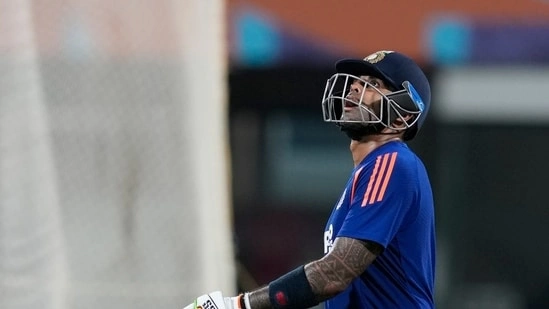
India head into their crucial Super 8 clash against Zimbabwe with more than just two points at stake. Following a heavy defeat to South Africa, their net run rate has slipped deep into the negative, putting additional pressure on this fixture. In a tightly contested group, improving NRR could prove decisive in the race for a semi-final berth, making the margin of victory or speed of chase just as vital as the result itself.
After the loss to South Africa, India’s NRR deficit effectively mirrors the 76-run margin of defeat. To push their net run rate back into positive territory immediately after the Zimbabwe match, India must overturn that gap convincingly.
If India bat first the equation is straightforward. They need to secure a victory by at least 77 runs to move into positive NRR after two Super 8 matches. That creates a clear benchmark while defending a total. For example if India post 170 they must restrict Zimbabwe to 92 or fewer. A total of 180 would require Zimbabwe to be held to 103 or below. If India score 190 Zimbabwe must not cross 113. And if India reach 200 they need to keep Zimbabwe to 123 or less. Batting first therefore provides a defined and controllable pathway because the required margin remains fixed.
The situation becomes more demanding if India chase. While a comfortable win will improve the net run rate it may not be enough to push it into positive territory unless the chase is completed at remarkable speed. To climb above zero NRR in one game India would need to hunt down targets in roughly 10 to 12 overs depending on the score set by Zimbabwe.
For instance if Zimbabwe score 140 India would need to reach 141 in around 10.4 overs. A target of 160 would require a chase in approximately 11.2 overs. If Zimbabwe manage 180 India would have to finish the pursuit in about 11.4 overs. Even a 200 target would need to be chased down in close to 12 overs to guarantee a positive shift in NRR. Any slowdown in the middle overs could leave India still in negative territory despite winning.
The tactical takeaway is clear. Winning the toss and opting to bat first offers India a more predictable route to repairing their net run rate because the objective is a defined 77-run margin. Chasing remains an option but demands an aggressive all-out approach from the first ball.
For India this match is not simply about staying alive in the tournament. It is about delivering a dominant performance strong enough to reset their campaign and strengthen their semi-final qualification hopes.