


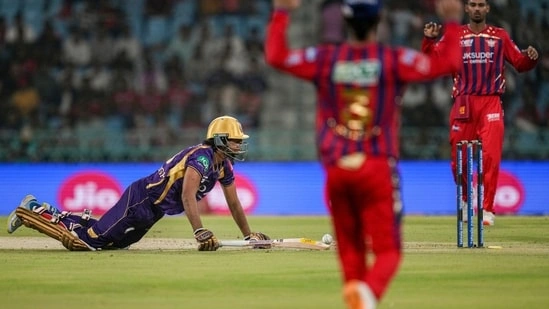
A dramatic moment unfolded during the IPL 2026 match between Lucknow Super Giants and Kolkata Knight Riders as young batter Angkrish Raghuvanshi was dismissed for obstructing the field—an extremely rare occurrence in the tournament’s history.
The incident took place at Ekana Cricket Stadium during the fifth over of KKR’s innings. Raghuvanshi attempted a quick single after playing a shot off Prince Yadav, but his partner Cameron Green sent him back. As Raghuvanshi turned and sprinted towards the crease, he dived to make his ground while the fielder aimed a throw at the striker’s end.
During this sequence, the ball struck Raghuvanshi while he was diving, leading to an appeal by the fielding side led by Mohammed Shami. The on-field umpires referred the decision to the third umpire, Rohan Pandit, who ruled him out after reviewing the footage.
The dismissal was based on Law 37, specifically the rule related to obstructing the field. According to the law, a batter can be given out if they change direction while running between the wickets without a valid reason and, in doing so, obstruct a fielder’s attempt to complete a run-out.
In Raghuvanshi’s case, two key factors were considered. First, he altered his running line more than once after committing to the run. Second, replays showed that he was aware of the incoming throw, as his eyes followed the ball before impact. These elements indicated that his movement interfered with the fielder’s attempt.
Importantly, the law does not require proof of intent. Whether Raghuvanshi meant to block the throw or not was irrelevant. The decision was purely based on the change of direction and lack of probable cause, both of which were deemed to have occurred.
The call sparked strong reactions from the Kolkata Knight Riders camp, including coach Abhishek Nayar, and also drew debate among commentators like Daren Ganga. However, under the current rules, the third umpire’s decision aligned with the laws governing the game.
This rare dismissal once again highlights how strictly cricket laws are applied, especially in situations involving field obstruction, where even slight deviations can lead to a wicket.