


Former England cricket captain Michael Atherton has called on the International Cricket Council (ICC) to reconsider scheduling India vs Pakistan matches in global tournaments following the heated Asia Cup 2025. The tournament, which concluded on September 28 with India defeating Pakistan in the final, was marred by controversy and political undertones rather than cricketing spirit.
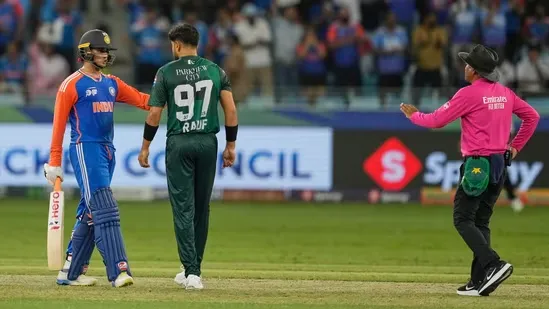
Tensions between the two nations escalated after the Pahalgam terror attack and subsequent Operation Sindoor, leading to visible friction on the field. The first flashpoint came on September 14, when the Indian team led by Suryakumar Yadav declined to shake hands with Pakistan players after their match. The rivalry intensified during the Super 4 stage, with Pakistani players Haris Rauf, Faheem Ashraf, and Sahibzada Farhan drawing criticism for provocative gestures.
The controversy peaked when India refused to accept the Asia Cup trophy from Mohsin Naqvi, Pakistan’s Interior Minister and Asian Cricket Council (ACC) chairman. The fallout led Atherton to write in his column for The Times, where he questioned the ICC’s motives behind continually arranging fixtures between the two sides despite worsening diplomatic relations.
Atherton acknowledged that India vs Pakistan encounters bring immense economic value to ICC tournaments, contributing significantly to the $3 billion broadcast rights cycle (2023–2027). However, he argued that the governing body should prioritize transparency and integrity over profit.
“Cricket once symbolized diplomacy, but it has now become a proxy for political and ideological tensions,” Atherton wrote. “No sport should manipulate fixtures purely for financial gain, especially when such encounters are being used for propaganda rather than peace.”
He further suggested that the next ICC broadcast cycle should feature a transparent fixture draw — without prearranged meetings between India and Pakistan. “If the two sides don’t face each other in every tournament, so be it,” Atherton emphasized.
India and Pakistan have met in every ICC tournament since 2013, making their matches some of the most-watched events globally. Despite their massive audience appeal, Atherton’s statement has reignited debate over whether cricket should continue serving as a stage for political narratives rather than sporting excellence.