


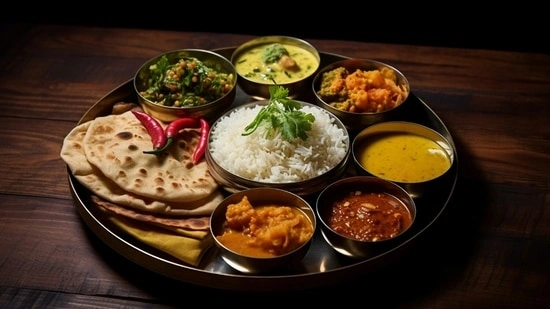
Many Indians struggle with gradual weight gain and lifestyle-related health concerns despite eating mostly home-cooked meals. According to fitness coach and certified nutritionist Kamal Saini the problem often lies not in food quality but in excessive portion sizes and frequent eating from morning until night. He explains that consuming heavy meals throughout the day leaves little room for the body to burn surplus calories.
Kamal Saini recently highlighted a common eating routine followed by many households that unknowingly leads to extreme calorie overload. A typical day often begins with a rich breakfast of aloo parathas cooked with butter and accompanied by tea which can contribute nearly 700 to 800 calories. Lunch usually includes chapatis rice dal sabzi and papad adding another 800 calories to the total intake.
The calorie count continues to rise in the evening with tea paired with biscuits or namkeen contributing an additional 700 to 800 calories. Dinner is often similar to lunch in portion size and calorie content once again reaching around 800 calories. Late night snacking on sweets or salty snacks can further add 600 to 800 calories before the day ends.
Saini explains that this pattern can easily push total daily consumption close to or even beyond 4,000 calories without accounting for occasional indulgences such as samosas golgappas bhature or chocolates. He points out that the recommended daily calorie intake is roughly 2,000 to 2,500 calories for men and 1,800 to 2,200 calories for women. This means many people are consuming nearly 1,500 excess calories every day without adequate physical activity to offset it.
Over time this constant calorie surplus is stored as body fat increasing the risk of obesity diabetes and other lifestyle diseases. The nutritionist stresses that reducing portion sizes limiting snacking and balancing food intake with regular exercise are essential for maintaining long term health and fitness.