


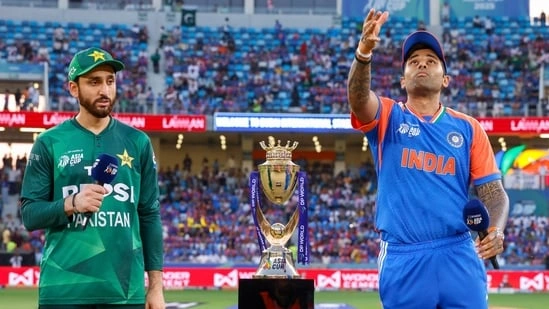
Pakistan’s latest decisions on and off the field once again underline how deeply India continues to influence their cricketing approach. During the U19 World Cup Super 6 clash on February 1 Pakistan shocked fans and experts alike by refusing to seriously chase a challenging target of 253 runs in 33.3 overs against India. Rather than pushing for a semi-final spot the team appeared satisfied with merely avoiding a heavy defeat only to eventually lose by 58 runs. The timid approach quickly became a talking point across the cricketing world.
What amplified the controversy was an announcement made just hours before the match ended. The Government of Pakistan confirmed that the senior men’s team would not play India in the upcoming Men’s T20 World Cup. While the move was presented as a gesture of solidarity with Bangladesh the timing and context suggested otherwise. Pakistan Cricket Board officials had already been vocal against the ICC after Bangladesh was replaced by Scotland in the tournament due to travel concerns. Despite repeated meetings between PCB chairman Mohsin Naqvi and Prime Minister Shehbaz Sharif Pakistan eventually agreed to participate in the tournament starting February 7 but with one major exception the India fixture scheduled for February 15 in Colombo.
This selective stance has raised serious questions about Pakistan’s priorities. By choosing to boycott only the India match Pakistan appears more focused on challenging the BCCI than safeguarding its own cricketing future. While the ICC has allowed Pakistan time to reconsider the decision the governing body has previously shown it is willing to act firmly when tournament rules are breached. The refusal to play at a neutral venue directly violates ICC regulations and could invite strict sanctions.
Potential consequences include forfeiture of the match suspension from the tournament withholding of ICC revenue and legal claims from broadcasters affected by the loss of the marquee India Pakistan clash. Unlike India whose cricket economy is driven by the IPL and bilateral series Pakistan relies heavily on ICC distributions for financial survival. A significant reduction or suspension of this income could severely weaken the PCB. Further risks include restrictions on hosting international teams and a loss of foreign player participation in the Pakistan Super League which could downgrade it to a domestic competition.
From a competitive standpoint the decision also hurts Pakistan’s World Cup campaign. A forfeited match hands India two points and severely damages Pakistan’s net run rate which is calculated as zero runs scored across the full quota of overs. In a tightly contested group where Pakistan must also face teams like the USA such a handicap could prove decisive.
The episode highlights a growing need for the ICC to rethink its approach of consistently placing India and Pakistan together in group stages to guarantee viewership. Recent developments show that cricketing rivalry has increasingly given way to political confrontation. Pakistan’s attempt to score a symbolic victory may ultimately cost them far more than it hurts their rivals placing the future of their cricket ecosystem at serious risk.