


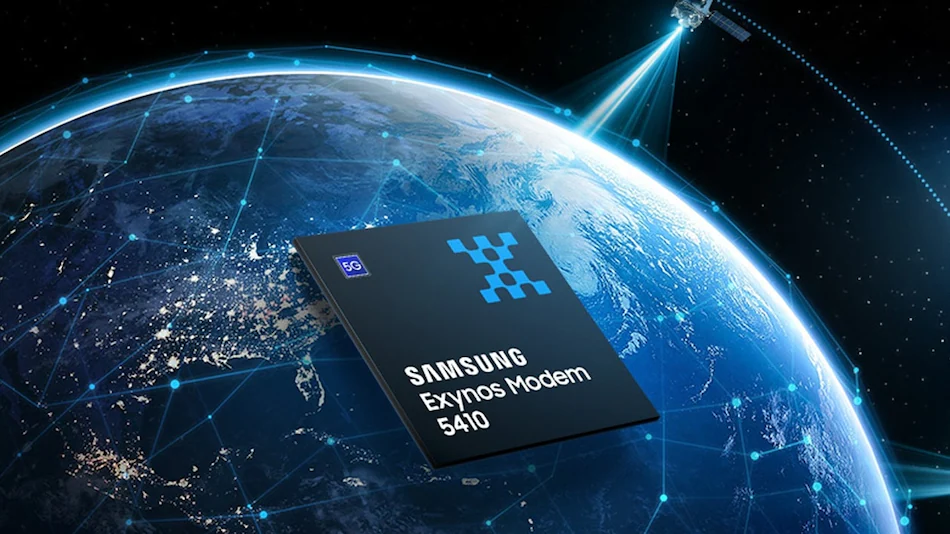
Samsung appears to be preparing a major connectivity upgrade for its next flagship smartphones. The upcoming Samsung Galaxy S26 series is expected to introduce advanced satellite communication features, including voice and video calling, thanks to the newly announced Exynos Modem 5410. This development could place Samsung alongside Apple and Google, both of which already offer satellite-based communication on select devices.
Although the Galaxy S26 lineup is still a few months away from launch, Samsung has officially revealed details of the Exynos Modem 5410, a next-generation 5G modem designed to work with the upcoming Exynos 2600 processor in select markets. The modem brings support for LTE Direct-to-Cell satellite connectivity, enabling users to stay connected even in areas with no traditional network coverage, such as deserts, mountains, or remote rural regions.
The Exynos Modem 5410 integrates both cellular and satellite technologies into a single chip. It supports LTE DTC for satellite-based voice calling, NB-IoT NTN for messaging and location sharing, and NR NTN technology, which enables higher-bandwidth communication such as video calls. All these technologies are built on the 3GPP Release 17 standard, ensuring global compatibility and future readiness.
Compared to the previous Exynos Modem 5400, which offered only basic satellite messaging support, the new modem represents a significant leap forward. Samsung has also highlighted improvements in security through Root of Trust-based hybrid post-quantum cryptography, along with enhanced power efficiency that could help extend battery life during satellite usage.
If implemented fully, the Galaxy S26 series could allow users to make satellite voice calls, send messages, share locations, and even conduct video calls without relying on cellular towers. This would be a major upgrade over the Galaxy S25 lineup, which was limited to emergency satellite texting in select regions.
The Galaxy S26 family is expected to include the Galaxy S26, Galaxy S26 Plus, and Galaxy S26 Ultra. While some regions may receive Snapdragon-powered variants, markets such as South Korea and parts of Europe are likely to get models equipped with the Exynos 2600 chipset paired with the Exynos Modem 5410. The official launch is anticipated around February, continuing Samsung’s early-year flagship release cycle.
With satellite connectivity becoming an increasingly important feature for safety, travel, and emergency communication, Samsung’s move could significantly enhance the real-world usefulness of its next-generation smartphones.