


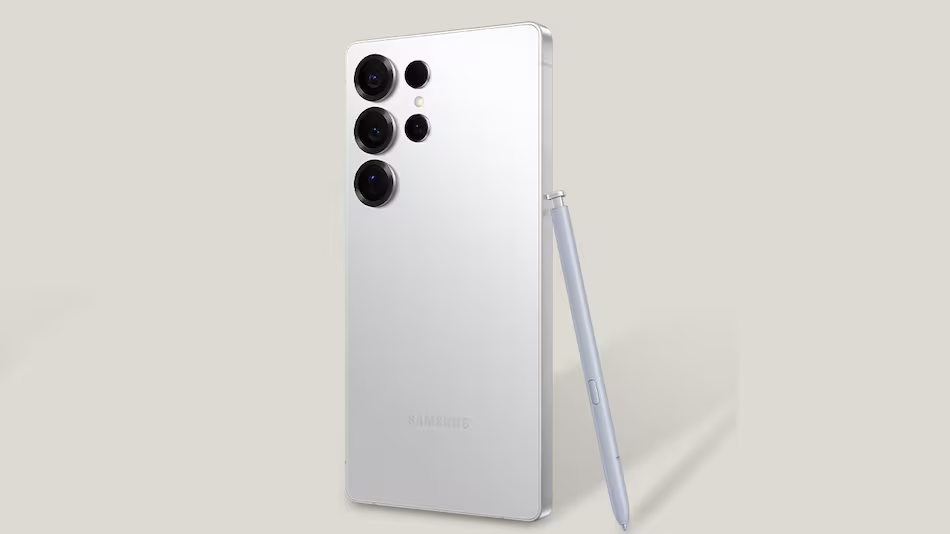
Samsung appears to be preparing the Galaxy S26 Ultra with a focus on software improvements rather than new camera hardware, according to recent leaks. While the upcoming Exynos 2600 chipset is expected to deliver major advancements in power efficiency, AI image processing and video recording, the device may still rely on mostly the same camera setup seen on the Galaxy S25 Ultra.
A reliable source on X claims that the Galaxy S26 Ultra could keep its 200-megapixel primary camera, 50-megapixel ultrawide sensor, and 50-megapixel 5x periscope lens. The only noticeable change may be a slightly upgraded 12-megapixel 3x telephoto camera, replacing the previous 10-megapixel one. The selfie camera is also expected to remain a 12-megapixel sensor. Some reports suggest modest aperture improvements to enhance low-light performance, but nothing groundbreaking compared to rivals like Xiaomi and Vivo that are pushing more aggressive upgrades.
Samsung’s cautious approach might be linked to maintaining feature consistency across Snapdragon and Exynos variants. Even though the Exynos 2600 reportedly supports advanced functions such as 8K HDR10+ 60fps recording and improved RAW processing, Samsung may disable some features if the Snapdragon version cannot match them. Earlier rumors hinted that the chipset could handle a massive 320-megapixel sensor or multiple 108-megapixel sensors simultaneously, supported by faster real-time AI processing.
The newest information suggests that Samsung may unveil those powerful capabilities in later flagships, while the S26 Ultra focuses on refined computational photography rather than brand-new components. Charging performance, however, is likely to see a boost. The phone is rumored to include an upgraded PPS charging system that delivers up to 55W for the first charge cycle before stabilizing at 45W to improve speed and battery safety.
Overall, the Samsung Galaxy S26 Ultra is shaping up to be an evolution of its predecessor instead of a bold redesign, relying on AI improvements and next-gen processing power to keep its flagship camera experience competitive.