


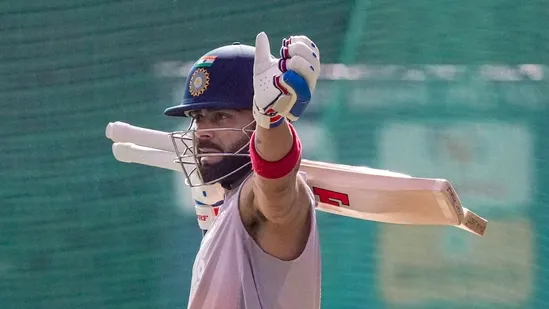
Former India cricketer and commentator Sanjay Manjrekar has once again stood firmly by his controversial view that One Day Internationals are the most batter-friendly format, particularly for players occupying the top three positions. His comments have reignited discussion after linking this belief to Virat Kohli’s decision to step away from Test cricket while continuing in ODIs.
Manjrekar’s remarks came shortly after stellar Test centuries by Joe Root and Steve Smith in the final Ashes Test at the Sydney Cricket Ground. Reflecting on those performances, he expressed disappointment over Kohli’s retirement from Tests in May 2025, arguing that the former India captain chose to continue in what he sees as the least demanding format for elite batters.
Virat Kohli concluded his Test career after representing India in 123 matches, scoring 9,230 runs with 30 centuries and 31 half-centuries. His final Test series, the Border-Gavaskar Trophy in Australia, proved difficult, with Kohli managing just 190 runs across nine innings and struggling repeatedly outside the off stump. Manjrekar suggested that these recurring technical issues may have influenced Kohli’s decision to walk away from red-ball cricket rather than address those flaws.
Explaining his long-held belief about ODIs, Manjrekar pointed out a historical trend in Indian cricket. According to him, many batters who eagerly opened or batted at number three in ODIs were far less willing to take on similar responsibility in Test matches, preferring the safety of middle-order positions instead. This contrast, he argued, highlights how much easier it is to bat at the top in the 50-over format.
Manjrekar emphasized that opening batters in ODIs benefit from fewer close-in fielders, limited attacking intent from bowlers, and clear scoring opportunities during powerplays. He noted that bowlers in ODIs are often focused on containment rather than dismissals, making it easier for disciplined batters to survive the early overs before capitalising once the field spreads.
In contrast, Manjrekar reserved his highest praise for middle and lower-middle order batters such as MS Dhoni, Yuvraj Singh, and Suresh Raina. He described positions four, five, and six as the most challenging in one-day cricket, where players face changing match situations, limited deliveries, and greater pressure to score quickly while still preserving wickets.
Taking his argument further, Manjrekar stated that he does not consider top-order ODI batters as true batting greats, given the structural advantages they enjoy. In his view, ODIs provide the maximum opportunity to accumulate runs, particularly for those batting in the top three, making it an unreliable format to judge all-time batting excellence.
According to Manjrekar, if one is searching for genuine batting greatness, Test cricket remains the ultimate measure, while ODIs — especially at the top of the order — offer conditions that heavily favour run accumulation over pure technique and resilience.