


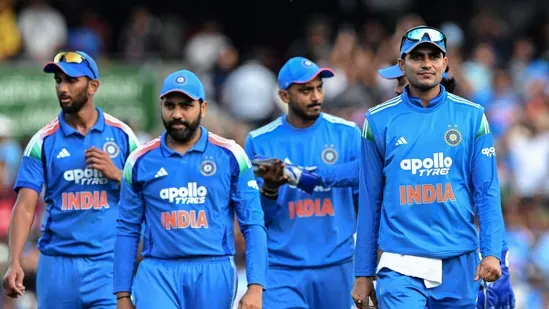
India’s captaincy roadmap is becoming clearer as Shubman Gill continues to emerge as the long-term leader across formats. With Gill already guiding the Test and ODI squads and serving as the T20I vice-captain, his transition to full-time captaincy is now seen as inevitable. According to former BCCI selector Salil Ankola, this leadership shift was not a sudden decision but a well-considered plan first discussed in 2023.
Gill’s breakthrough year in 2023—where he piled up centuries and double tons and contributed significantly during the ODI World Cup despite illness—made selectors confident that he would eventually succeed Rohit Sharma. While Rohit’s captaincy era was always expected to be finite due to age, Gill’s youth and rapid development positioned him as the ideal long-term choice. Ankola revealed that coaches senior players and selectors collectively believed that Gill possessed the temperament and maturity required to lead India into a new era.
When Rohit stepped away from Test cricket the baton passed naturally to Gill. He justified the faith with a spectacular performance in England scoring 756 runs at an average above 75 including four centuries in the Anderson-Tendulkar Trophy which ended 2-2. His ability to withstand pressure and dominate challenging conditions showed that he is not just a future leader but already the backbone of India’s batting and leadership group. India’s struggles in the home Test series against South Africa without Gill further underscored his growing importance.
Ankola emphasised that the captaincy handover was a collective call made after considering inputs from coaches senior players and past cricketers. He added that public debate would continue but Gill’s performance proved that he had both the mental strength and cricketing maturity to take the team forward. As Suryakumar Yadav’s T20I captaincy tenure nears its expected end after the 2026 T20 World Cup India is set to embrace a unified captain across formats with Gill at the helm.