


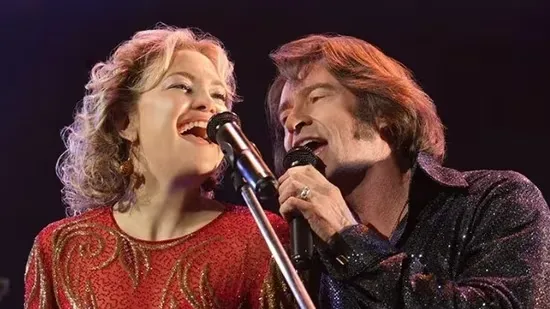
Song Sung Blue is a heartfelt musical drama that looks beyond tribute performances and nostalgia to explore human connection resilience and the healing power of music. Directed by Craig Brewer and inspired by a true story the film places its emotional weight firmly on character rather than spectacle. With Hugh Jackman and Kate Hudson at the center the movie becomes an intimate portrait of two wounded individuals finding meaning through performance.
Set in late-1980s Milwaukee the story follows Mike Sardina a Vietnam War veteran struggling with sobriety and self-worth and Claire Sardina a talented hairdresser grappling with emotional fragility and unrealised dreams. When the couple unexpectedly finds local success by forming a Neil Diamond tribute act named Lightning and Thunder music becomes more than entertainment. It turns into a lifeline. Their growing popularity at county fairs and small venues slowly opens doors to bigger opportunities including sharing stages with major acts while simultaneously testing their relationship and inner strength.
Hugh Jackman brings raw intensity to Mike portraying him as a man who sings not for applause but for survival. His performance is restless vulnerable and deeply human capturing the desperation of someone chasing dignity later in life. Kate Hudson strips away glamour to present a grounded and quietly powerful Claire whose voice carries both pain and hope. Together they create a believable emotionally charged partnership that anchors the entire film.
Craig Brewer’s direction treats the world of tribute artists with empathy avoiding caricature or mockery. Musical moments are given room to breathe allowing Neil Diamond’s songs to function as emotional storytelling devices rather than simple throwbacks. Even for audiences unfamiliar with Neil Diamond’s legacy the film frames the music as comfort and escape making it universally accessible.
However the film occasionally overreaches emotionally. Tragedy arrives in heavy succession and some supporting storylines particularly involving the children feel underdeveloped. The final act lingers longer than necessary and the tonal shift from uplifting to somber may surprise viewers expecting a lighter musical journey.
Despite these flaws Song Sung Blue succeeds because of its sincerity. It is a film that believes deeply in the redemptive power of art and the importance of being seen and heard. Anchored by strong performances and emotional honesty it rises above nostalgia to deliver something quietly moving and enduring.