


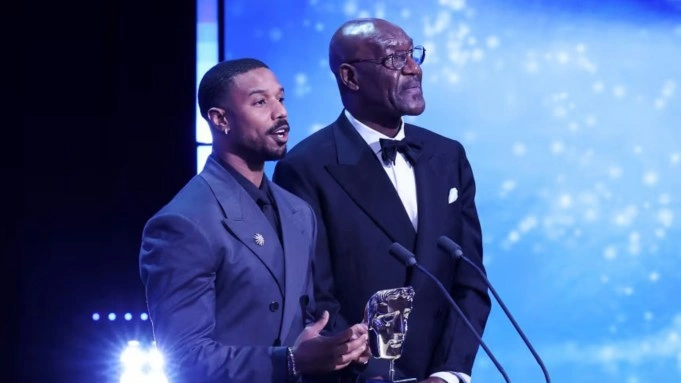
The head of BBC has responded to growing criticism surrounding a controversial moment during the BAFTA Film Awards 2026 broadcast explaining that the inclusion of offensive language in the final programme was the result of what he described as a genuine production mistake.
The incident occurred when Tourette’s campaigner John Davidson shouted a racial slur while actors Michael B. Jordan and Delroy Lindo were presenting an award on stage. Davidson attended the ceremony as the subject of the nominated documentary I Swear which explores his experience growing up with Tourette’s syndrome in Scotland.
The awards ceremony aired in the United Kingdom with a two hour broadcast delay on the BBC and was later available on the broadcaster’s streaming platform. Despite the delay the controversial moment was not removed from the televised version which led to significant public discussion and criticism in the days that followed.
In a letter sent to the chair of the U.K. government Culture Media and Sport Committee Davie explained that the broadcast production team monitoring the live feed inside the outside broadcast truck did not hear the offensive word when it was first spoken. As a result no editorial decision was made at the time regarding whether the moment should be removed from the delayed broadcast.
According to Davie the editing team later detected a separate incident during actress Wunmi Mosaku’s acceptance speech for best supporting actress. That second moment was identified and immediately removed from the edited programme prepared for broadcast.
However when reports began circulating online about the earlier slur the production team believed they had already removed the referenced moment because they had edited the later incident. This misunderstanding created confusion and resulted in the first occurrence remaining in the final broadcast version.
Davie also acknowledged that questions remain regarding why the programme stayed available on the BBC’s streaming platform for several hours before the issue was fully recognised. He confirmed that the broadcaster is conducting a further review to determine why the two separate incidents were not detected sooner and why additional action was not taken more quickly after the broadcast.
The BBC chief added that the organisation intends to learn from the situation and implement stronger editorial checks to prevent similar broadcast errors in the future.