


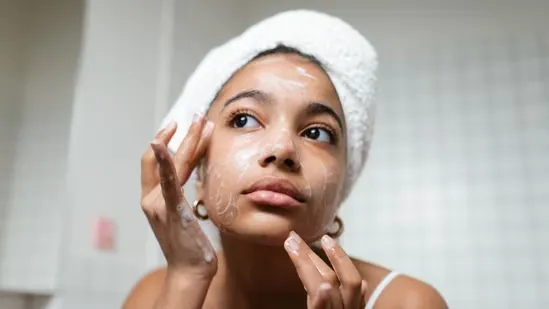
Many Indians struggle with visible pores that make their skin appear textured and uneven especially on areas like the cheeks forehead and nose. With increasing beauty trends promoting smooth glass like skin more people are paying close attention to why pores look larger on Indian skin compared to other ethnicities.
According to experts Indian skin naturally has more open pores. Dermatologist Dr Aparna Santhanam explains that pores are normal pathways that allow oil and sweat to reach the surface of the skin. However due to genetics and the hot humid climate in India these pores tend to be larger and more noticeable. Research on Indian skin found that our pore size is nearly four times larger and pore density almost five times higher compared to Chinese skin making textured appearance more common.
Environmental factors like heat pollution sweat and excess oil production also increase pore visibility. The dermatologist highlights that completely poreless skin is impossible because pores are a natural structure of the skin. Instead she suggests focusing on healthier skin with a refined texture rather than comparing it with other ethnicities.
Can enlarged pores be eliminated permanently The answer is no. Pore size is mainly determined by genetics. But with proper skincare pores can appear smaller and less visible. Managing sebum production removing buildup and strengthening the skin barrier can help the skin look smoother.
Dr Santhanam recommends three key strategies for pore care. First gentle exfoliation using salicylic acid to keep pores clean and glycolic acid to improve skin texture. Second using niacinamide to reduce excess oil and reinforce the skin barrier. Third spot treatments with ingredients like azelaic acid and vitamin E can help calm breakouts and reduce congestion.
People with oily and acne prone skin are most likely to experience enlarged pores because the overactive oil glands stretch pores further. A tailored skincare routine focusing on oil control and cleansing is essential to prevent clogged pores and breakouts.
This content is for educational purposes only. For any skin concerns always consult a certified dermatologist.